
Arthrosamid® is an injectable hydrogel implant that delivers long-lasting, proven pain relief without surgery— redefining treatment for knee osteoarthritis

Pain Reduction
In all our studies (See list of studies) Arthrosamid® exceeds the MCID of 9 points16 and improvement is maintained up to 5 years after a single injection.
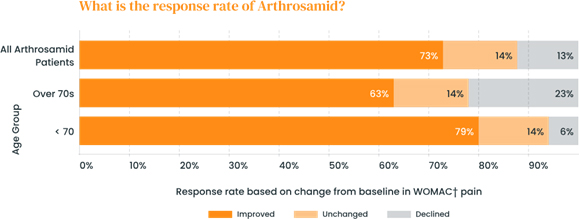
Close to 80% Response rate
Patients in the under 70 years group reported close to 80% positive response rate following treatment with Arthrosamid®.
Safe & Effective
Arthrosamid® remains safe and effective for its intended use 5 years after treatment.
Reproducible pain reduction Results
In all our studies (See publications list), Arthrosamid® exceeds the MCID of 9 points16 and improvement is maintained up to 5 years after a single injection.
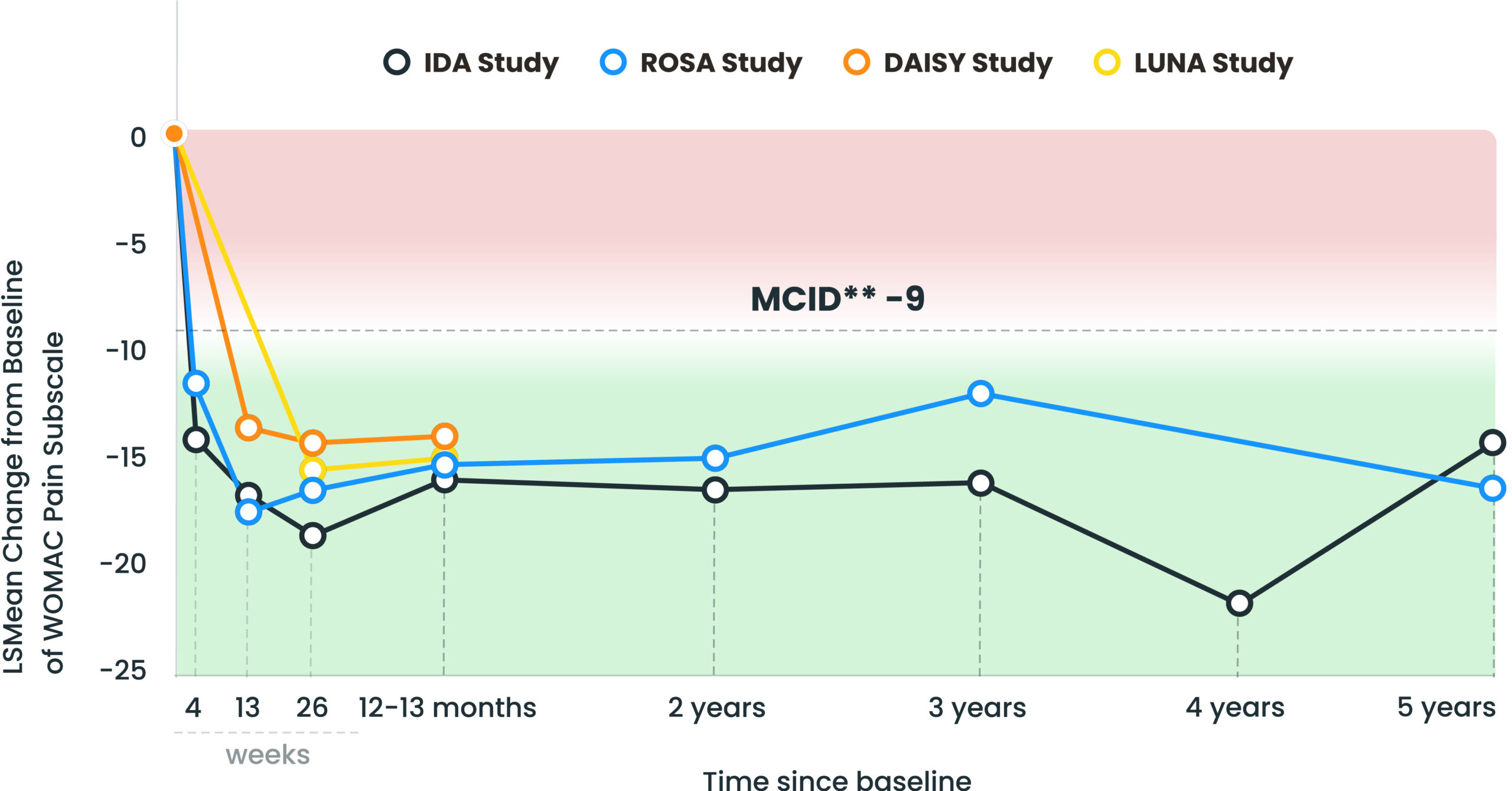
Across all our studies, Arthrosamid® exceeded the MCID by 9 points, with improvements sustained for up to 5 years following a single injection
Responder rates by age
Safety of intra-articular polyacrylamide hydrogel (2.5% iPAAG) for the treatment of knee osteoarthritis symptoms
•16% of the participants had received arthroplasty surgery for knee osteoarthritis of the treated knee.
•There were no unexpected descriptions of abnormalities that could be associated with the prior treatment with iPAAG in the surgical reports.
•“Of these patients, none reported dissatisfaction with the outcome of the surgery and the arthroplasties were well functioning.”
•16% of the participants had received arthroplasty surgery for knee osteoarthritis of the treated knee.
•There were no unexpected descriptions of abnormalities that could be associated with the prior treatment with iPAAG in the surgical reports.
•“Of these patients, none reported dissatisfaction with the outcome of the surgery and the arthroplasties were well functioning.”
Indication, Patient Group and Usage
Arthrosamid® is intended to be used for symptomatic treatment of adult patients with knee osteoarthritis.
Contraindications
Arthrosamid® should not be injected:
• If an active skin disease or infection is present at or near the injection site.
• If the joint is infected or severely inflamed.
• If the patient has previously received treatment with a different non-absorbable injectable/implant.
• If the patient has received a knee alloplasty or has any foreign material in the knee.
• If the patient has undergone knee arthroscopy within the last six months.
• In haemophilia patients or in patients in uncontrolled anti-coagulant treatment.
344 million people living with osteoarthritis experience severity levels (moderate or severe) that could benefit from rehabilitation.